
By The Third Eye
Jigawa North East Senatorial District, comprising Eight local government areas under the historic Hadejia Emirate, is more than a political constituency—it is a region shaped by resilience, identity, and a proud legacy of self-determination.
From the pre-colonial era to contemporary Nigeria, the indigenous people of Hadejia have distinguished themselves through courage, perseverance, and an unwavering defense of their dignity. History records that when colonial forces arrived in Hadejia, they met stiff resistance from fearless local warlords who rejected oppression, humiliation, and subjugation. The spirit of defiance against injustice became woven into the very fabric of the people’s identity.
That enduring legacy continues to influence the district’s political culture today. Leadership emerging from Hadejia has often reflected the same defining qualities—determination, resilience, and an unshakable commitment to the collective good. Whether in politics, governance, or civic institutions, sons and daughters of the soil are widely regarded as individuals deeply invested in the progress and prosperity of their homeland.
As Nigeria gradually approaches the 2027 general elections, conversations about representation in Jigawa North East are intensifying. While democracy guarantees every citizen the constitutional right to participate in the political process, many stakeholders in the district argue that representation should also reflect historical identity, cultural belonging, integrity and genuine grassroots connections and productivity .
The debate is not merely about political eligibility; it is about emotional ownership and authentic stewardship. With a pool of qualified indigenous aspirants available, some opinion leaders believe it would be inappropriate for anybody with no much local community activities involvements to seek the senatorial mandate of a people whose history is defined by self-reliance and communal pride.
Local proverbs capture this sentiment succinctly: A stray (found) cat cannot become the true cat of the house.”and “Leadership belongs to the worthy; genuine commitment to national progress belongs to a true son of the soil.” These sayings underscore a deeply held conviction that representation must go beyond paperwork—it must resonate with identity and lived experience.
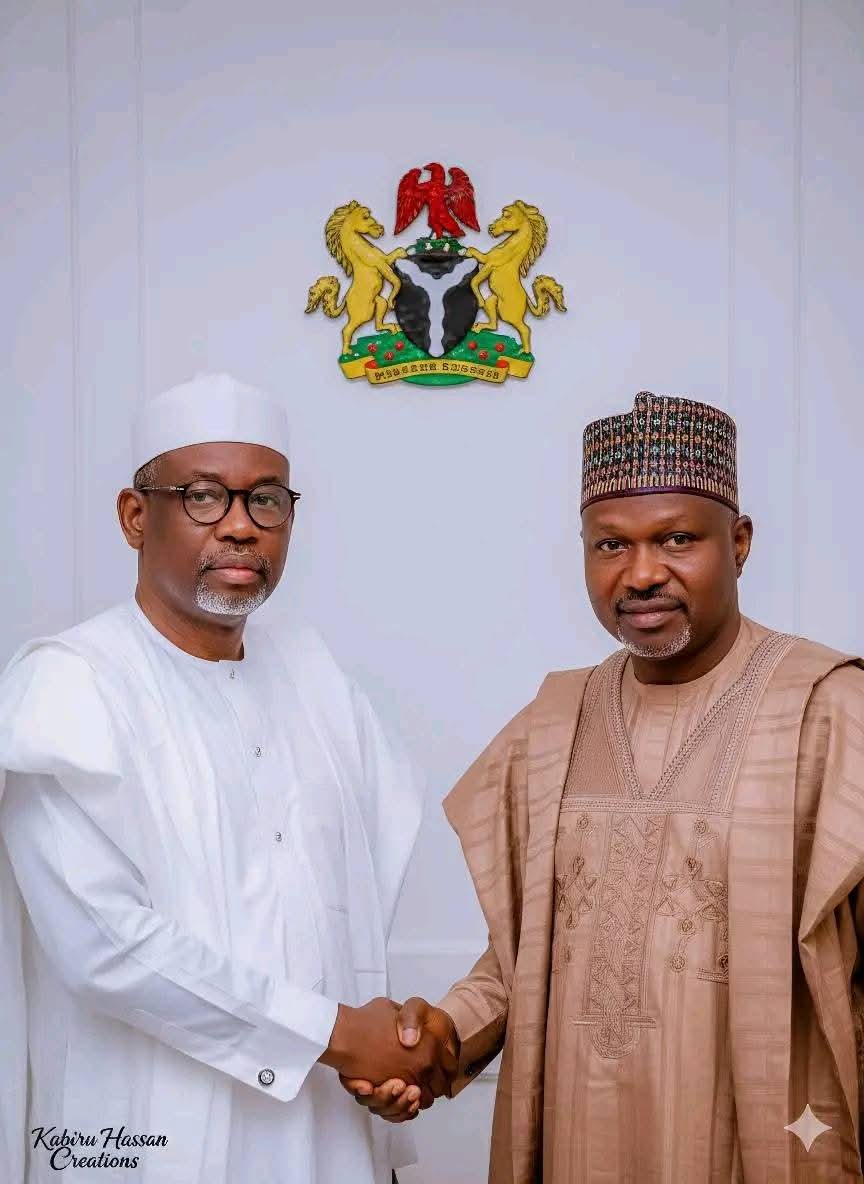
Within this context, attention naturally turns to the incumbent Governor, Malam Umar A. Namadi, and the serving Senator, Ahmed Abdulhamid Mallam Madori, whose political journeys are deeply rooted in the Hadejia axis. His Excellency Malam Umar A. Namadi was born and raised in Kafin Hausa, while Senator Ahmed Abdulhamid Mallam Madori hails from Mallam Madori town.
In addition, Governor Umar A. Namadi has strong ancestral ties to the Household of Islamic Scholars in Kafin Hausa, while Senator Ahmed Abdulhamid Mallam Madori is closely connected to Kofar Fada in Hadejia. Together, these backgrounds reflect and embody both the heritage and the aspirations of the district.
Supporters point to their records in office as evidence of competence and capacity, various developmental initiatives in infrastructure, education, social empowerment, and community development have been cited as indicators of active representation. For many constituents, these efforts form the basis of the growing call for continuity through a second-term mandate.
Beyond policy and projects, the question of legitimacy also arises. In political discourse, origin and authenticity often shape public trust. In this regard, community leaders maintain that Umar Namadi and Senator Mallam Madori’s roots in Hadejia are unquestionable, reinforcing their claim as a legitimate representative of the people’s collective will.
As 2027 draws nearer, Jigawa North East appears poised to make a decision shaped not only by political calculations but also by history, identity, and performance. In a district forged by resistance and sustained by pride, the choice of leadership is seen as both a democratic exercise and a reaffirmation of heritage.
Whether the electorate ultimately opts for continuity or change, one reality remains clear: in Jigawa North East, leadership is not just about occupying a seat—it is about carrying forward the enduring spirit of Hadejia to stand on the politics of identity and integrity . period .
Third Eye writing from Hadejia , Jigawa State .