
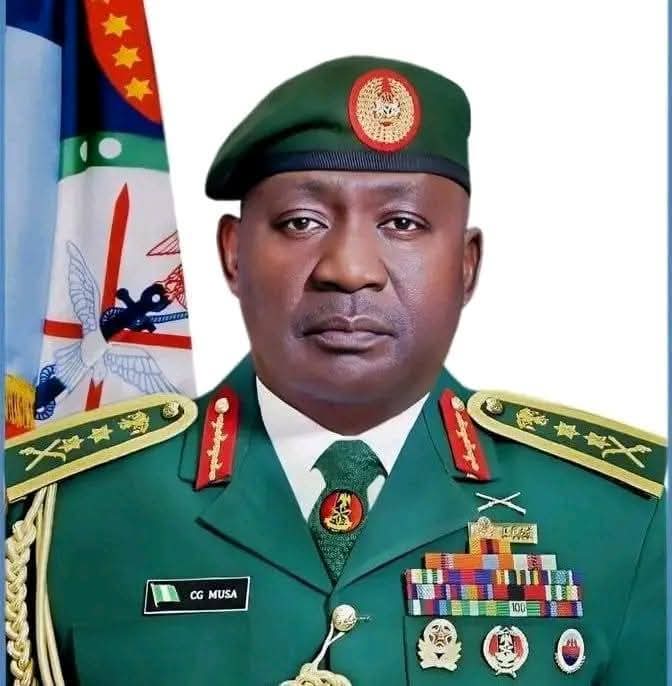
The current insecurity situation in the country is almost getting out of hands . No particular authority is holding the grip when the mighty military forces through the minister of defence confessed of inability to do it alone.
The U S Envoy in Nigeria, avoiding anybody Muslim in the country
The national Assembly are now the only hope for Nigerian . The reason why the Senate hold a special session on Tuesday 9 June 2026 to deliberate on the way out
Is Nigeria relocating the capital back to Lagos ?
Now the Senate says :—-
The issue of insecurity is one about which no serious, God-fearing public official can pretend any longer. It is a major issue. People may argue about whether the situation is getting worse or better. For me, the more important question is not simply to categorise it one way or the other, because sometimes things get worse before they get better. Let me explain that in the context of what happened on the floor of the Senate last week. The motion in question sought to establish a national committee to probe all financial releases made to the military in the prosecution of this war. We did not think that was the right approach, and we will not pretend otherwise. In the first instance, our military are giving their best under extraordinarily difficult circumstances. Let us remind ourselves that this is not a conventional warfare.
This same military faced Boko Haram terrorists in conventional battles and dislodged them. There was a time when these terrorists had their flags flying over communities they had captured — local governments in this country had become no-go areas under their control. When they sought to advance further, our military confronted them, defeated them in conventional battle, and reclaimed those territories. At that point, rather than continue engaging our forces in open combat, the terrorists dissolved into cells and adopted guerrilla tactics.
For the first time in our nation’s history, a military trained for conventional warfare was suddenly required to fight an unconventional enemy. Nobody had envisaged this — not the nation, not the military itself. But they did not give up. They have sustained the fight at great sacrifice — sacrifice to our officers and soldiers who are losing their lives, sacrifice to the families of victims who have been killed or kidnapped, and sacrifice to a government that must manage highly sensitive information while remaining accountable to the public. When that motion came before the Senate, the question before us was whether we wanted to put our own military on trial in the middle of a war.
Furthermore, it is an established principle that you do not interrogate the cost of waging a war until the war is over. You do not pause in the middle of a conflict to ask: how much have I given you, how much have you spent, and how did you spend it? Priorities must be clearly understood, and our priority at this moment cannot be to probe our military. To be clear: we were not suggesting that the military should spend money without accountability. We have standing Senate committees — on the Army, Air Force, Navy, and Defence generally — that are specifically charged with that oversight function. They approve budgets, conduct oversight, and carry out both scheduled and unscheduled inspections.
Members of these committees have travelled with service chiefs abroad to inspect military equipment procured on behalf of Nigeria, because much of what we are using to prosecute this war is not off-the-shelf material. Some items are ordered today but may not begin manufacturing for another three months. Before shipment, security consultants and committee members from both chambers conducted physical inspections. The same rigour applies on arrival at our ports and airports. We cannot, as a nation, announce every drone that arrives or detail its specifications and operational range. You cannot wage a war that way. A great deal is happening that cannot be debated openly on the floor of the Senate or the House of Representatives. Given that reality, agreeing to a motion to publicly probe the military would have been a dangerous diversion — and that is not where Nigeria’s focus should be today.
What I can tell the Nigerian public is this: by the grace of God, we are making significant progress. I know that is difficult for many Nigerians to accept, especially those living through the agony of this crisis. But the increased tempo of attacks in various parts of the country is, in part, an expression of the frustration of our enemies. They are taking casualties at a scale they have not experienced before.