
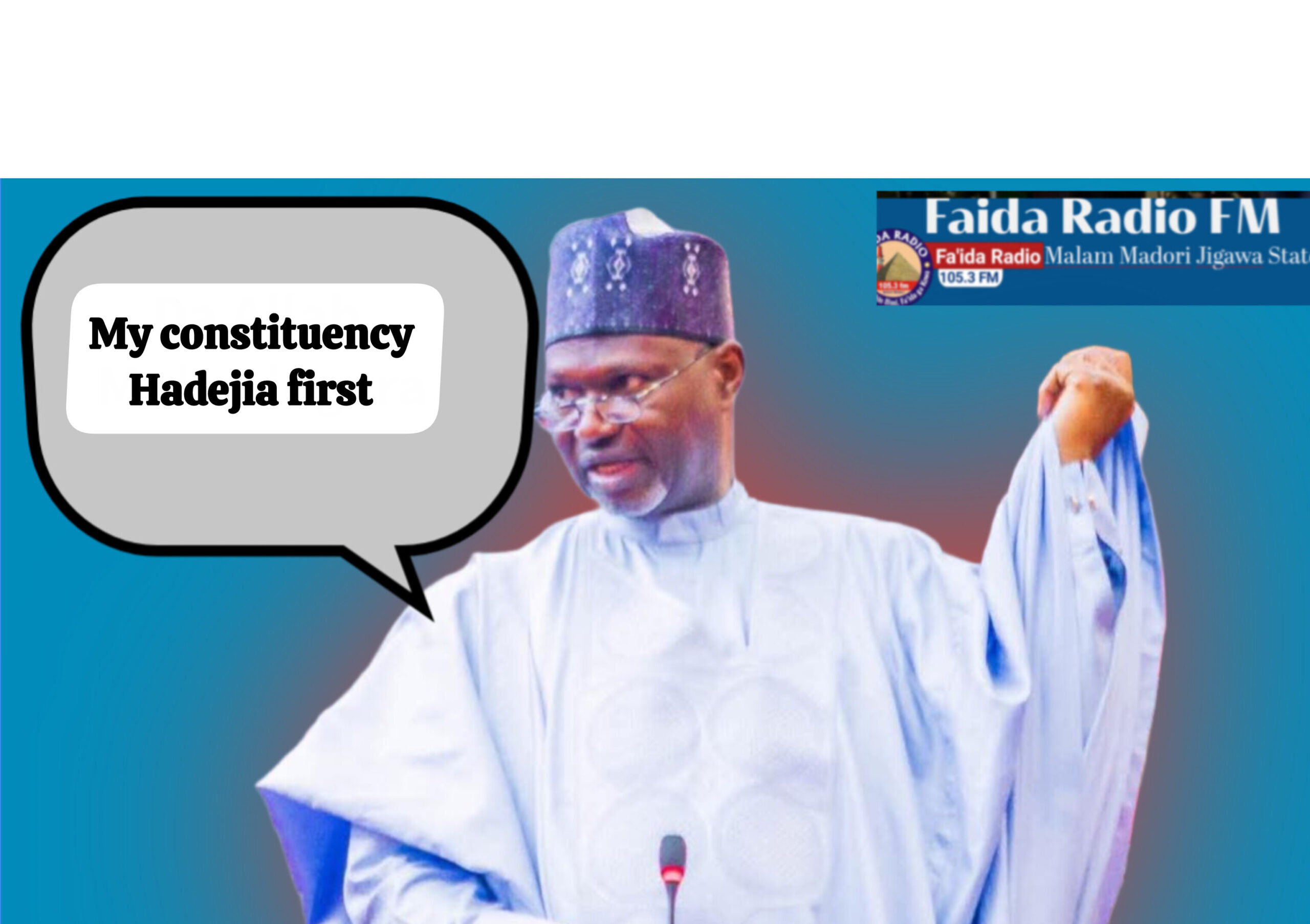
As preparations gradually gather momentum ahead of the 2027 general elections, political discussions across Jigawa Northeast Senatorial District are increasingly centered on one critical question: what path best serves the collective interest of the people?
By Musa Muhammad Hadejia
While political contests are often influenced by party considerations and personal ambitions, history has shown that sustainable progress is best achieved when decisions are guided by fairness, equity, continuity, and the overall development of the people. It is against this backdrop that the case for the re-election of Senator Ambassador Ahmad Abdulhamid Mallam Madori deserves careful consideration.
Since assuming office as the Senator representing Jigawa Northeast Senatorial District in 2023, Senator Mallam Madori has demonstrated a strong commitment to effective representation, legislative engagement, and constituency development. Within a relatively short period, he has established himself as a visible voice for the district at the national level while attracting attention to issues that directly affect the lives of his constituents.
His contributions have extended beyond legislative debates. Through empowerment initiatives, support for youth and community development programs, interventions in security infrastructure, and advocacy for strategic projects and Police Special Protection unit institution in Kafin Hausa, he has consistently worked to ensure that Jigawa Northeast remains relevant in national discussions. His support for the agitation for the creation of Hadejia State further reflects his commitment to advancing causes that resonate deeply with the aspirations of the people.
However, beyond performance and achievements lies a more compelling argument—one rooted in the principle of equity.
Allowing Senator Mallam Madori to complete a second term is therefore not merely about supporting an individual; it is about upholding a tradition of fairness and maintaining harmony among the various constituencies that make up Jigawa Northeast.
Moreover, experience remains one of the most valuable assets in legislative service. The first term often involves understanding parliamentary procedures, building strategic relationships, and mastering the complexities of governance. The second term is usually when that accumulated experience translates into greater influence, stronger advocacy, and increased developmental opportunities for constituents.
At a time when the district stands to benefit from continuity, replacing an experienced and performing senator could unnecessarily interrupt ongoing initiatives and weaken the momentum already established. Development is most effective when there is consistency of purpose and leadership.
Perhaps one of Senator Mallam Madori’s greatest strengths has been his inclusive approach to representation. His activities and interventions have not been confined to a particular local government area or constituency. Rather, they have reflected a broader commitment to serving the entire Jigawa Northeast Senatorial District, encompassing Hadejia, Auyo, Kafin Hausa, Birniwa, Guri, Kirikasamma, Kaugama, and Mallam Madori.
As the people prepare for another electoral cycle, it is important to look beyond political slogans and focus on what best promotes unity, stability, and progress. Elections should not only be about changing faces; they should also be about sustaining achievements and ensuring that ongoing
Musa Muhammad Hadejia ( Iyan heart )
A schooler and freelancer , writing from Hadejia, Jigawa State