
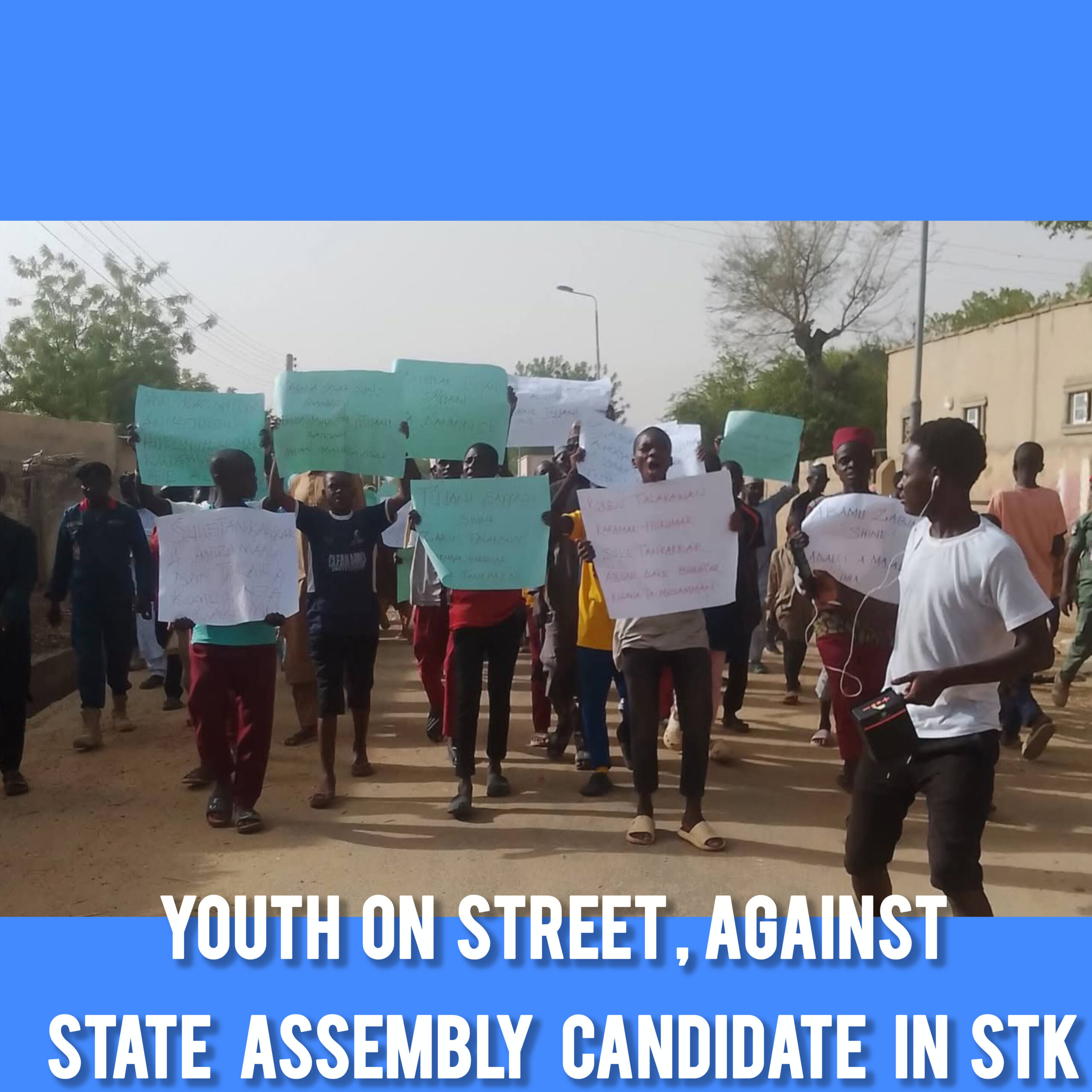
Why Sule Tankarkar local government Must Choose Its Own state Assembly representative
Opinion of Youth association of Sule Tankarkar local government area
As the 2027 general elections approach, the All Progressives Congress (APC) in Sule Tankarkar of Jigawa State stands at a critical crossroads. For the party to thrive in the extreme northern flank of the state it must respect the democratic will of the grassroots.
The special committee inaugurated to go for consensus must refrain from candidate imposition and instead allow for a transparent, credible process.
Here is an extensive look at why the youth of Sule local government went on streets to resist this imposition as anchored in the clear provisions of Nigerian law.
The APC Constitution and the Electoral Act emphasize popular participation. When members vote for their preferred aspirant, they gain a sense of ownership over the eventual candidate.
Furthermore, recent judicial precedents in Nigeria have shown that the courts are increasingly intolerant of forced candidates who are announced without following proper legal guidelines. Imposition often leads to endless litigation that can disqualify the party from the ballot entirely.
The legal framework now permits only consensus or direct primary modes, Section 84(2) of the Electoral Act 2022 explicitly states: “The procedure for the nomination of candidates by political parties for the various elective positions shall be by direct, indirect primaries or consensus.”
However, the consensus option is not a free pass for a backroom deal. It is a tightly regulated legal process designed to prevent the very imposition you warn against:
The Legal Trap of Forced Consensus (Section 84(9)): The Act is explicit. Where a political party purports to adopt a consensus candidate, it must “secure the written consent of all cleared aspirants for the position, indicating their voluntary withdrawal from the race and their endorsement of the consensus candidate.” In a competitive seat like that Sule Tankarkar state Assembly position where multiple aspirants have legitimate claims, forcing a consensus without genuine, written agreement from every single aspirant is a legal landmine.
The Mandatory Fallback (Section 84(10)): The Act foresees the difficulty of this process. It states that where a party “is unable to secure the written consent of all cleared aspirants for the purpose of a consensus candidate, it shall revert to the choice of direct or indirect primaries for the nomination of candidates.”
The Ratification Requirement (Section 84(11)): Even if written consent is miraculously secured, the process is not complete. The Act mandates that “A special convention or nomination congress shall be held to ratify the choice of consensus candidates at designated centres.”
If any of these procedural steps are skipped, the nomination is void. The APC cannot afford such a risk.
The ultimate goal of any political party is to win. Yes, the paty may favor a candidate based on loyalty or deep pockets, but those factors do not always translate to votes on the ground. A candidate who emerges through a free and fair primary has already passed a stress test.
The Path Forward: A Call for Fairness
The Jigawa State APC and of course H.E M Umar Namadi fca should play the role of an impartial umpire, not a kingmaker. To secure Sule Tankarkar to Guaranteed a Level Playing Field: